
FutureGovernance: The Work Ahead – Post 6 of 6
We began this series with a stark truth: association governance is not keeping pace with the demands of our time. We conclude with a hopeful one: it can. What We Have Learned Governance must shift from oversight to foresight. Director education is a fiduciary duty, not an option. Boards must confront adaptive challenges, not hide behind technical fixes. […]
The Seven Capacities at the Board Table – Post 5 of 6.
If boards are to become engines of foresight and adaptation, they must embed the Seven Strategic Capacities into their practice. These capacities are not abstract ideals; they are practical levers that determine whether governance builds or erodes organizational strength. It is not the Board’s responsibility to do the job of the executive. It is the Board’s responsibility […]
Post 4 of 6 From Authority to Adaptation: Rethinking the Role of Directors
The traditional model of governance assumes that authority solves problems: electing the right directors, appointingor electing the right officers, and sound judgment will follow. But authority alone is no longer enough. Adaptive Challenges vs. Technical Problems Boards frequently misdiagnose adaptive challenges as technical ones. A declining membership base is not just a marketing issue—it may […]
Post 3 of 6 Teaching the Teachers: Why Director Education Cannot Be Optional.
We entrust association boards with guiding organizations through turbulent times, yet we too often send directors into that work unprepared. Unlike corporate boards, where director education is usuallyassumed, nonprofit associations still treat it as an afterthought or a reward for long-term membership. This must change. Education as Fiduciary Duty Serving on a board is not […]
From Oversight to Foresight: Boards as Engines of Capacity – Post 2 of 6
Governance is not static. It is a living practice that either expands or constrains an association’s ability to thrive. For too long, boards have equated their role with oversight—reviewing budgets, monitoring compliance, approving policies. Important, yes, but insufficient. The boards of tomorrow must move beyond oversight into foresight. Their purpose is not merely to watch […]
Governance at the Edge: Preparing Boards for What’s Next
Governance is the linchpin of association vitality. Yet too often, boards operate on outdated assumptions, constrained by habits that no longer serve today’s complex and brittle environment. The Future of Association Boards Report has made it clear: the governance models of yesterday cannot address the nonlinear challenges of today. This series will explore how associations can dramatically […]
BLOG – Part 3 of 6 – Accelerated Exits: Succession Planning in the Age of Constant Change
In a world defined by acceleration, the length of executive tenures is shrinking. Many association CEOs now stay in their roles just 4.5 to 7 years. Some depart due to burnout, others are recruited elsewhere, and still more leave when transformation efforts run aground. Succession is no longer an if—it’s a when. And it’s happening […]
BLOG– Part 2of 6 – Redefining the Role: From Curation to Creation in the Executive Director Seat
The Executive Director (ED) (CSO) has historically been viewed as the person tasked with maintaining programs, managing staff, and preserving organizational history. But as disruption becomes the norm, that orientation is no longer sufficient. The association executive of the future must not only maintain the house but also be willing to redesign it. The ED […]
BLOG – Leading in the Age of Disruption – Part 1 of 6 – Leading from the Edge: Adaptive Leadership for the Next Era of Associations
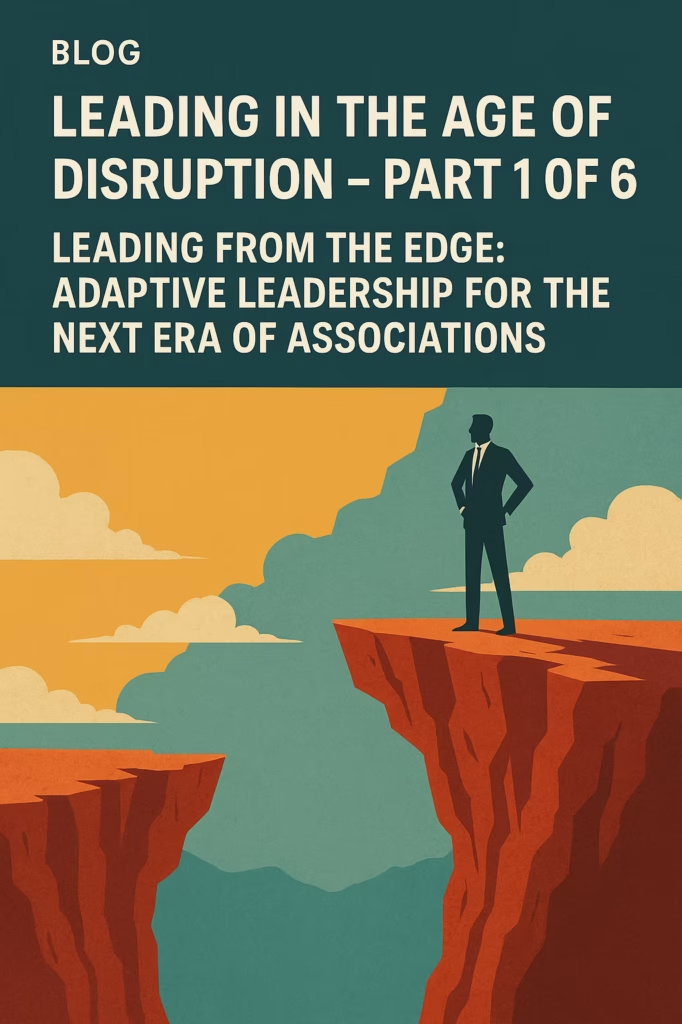
Associations are facing a cascade of disruptions: accelerated technology, shifting demographics, political polarization, and evolving member expectations. In this new environment, the old rules of leadership no longer apply. Stable environments have favored predictable planning, incremental improvement, and control-oriented management. But stability is no longer the norm. What’s needed now is adaptive leadership—a framework built […]
BLOG – Part 6 of 6 – Reinvention with Integrity: Guiding Legacy Associations Through Strategic Pivots
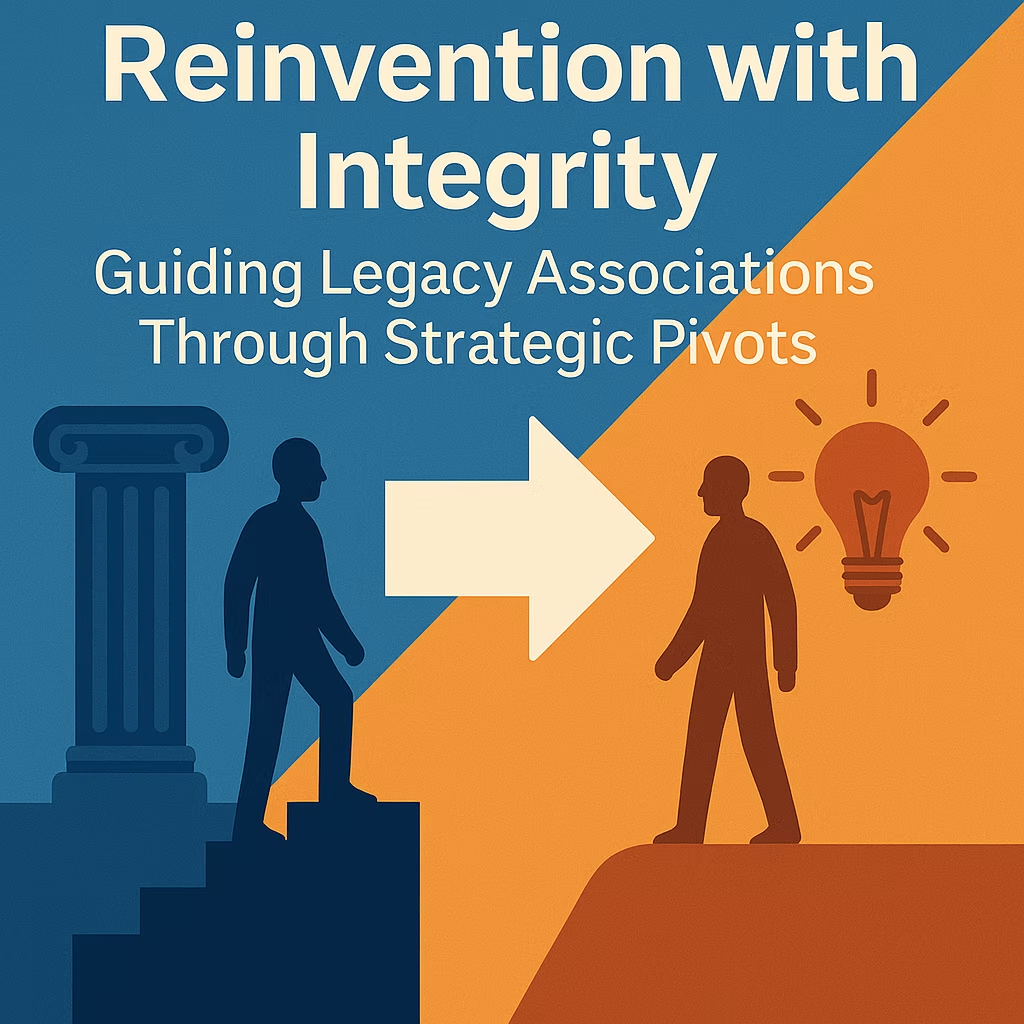
Legacy associations are rich with history, tradition, and identity. But those assets can quickly become liabilities when they prevent change. Reinvention is not optional—it’s a core leadership responsibility. Still, many fear that change will erase what makes them special. The truth is, you can evolve without erasing your essence. The Tension Between Legacy and Innovation […]