
Collaboration: Strategy as a Team Sport — Part 5 of 7
No executive or board member—no matter how experienced—can see the whole picture alone. That is why collaboration is essential to strategic planning. When diverse perspectives come together, the quality of thinking improves, blind spots shrink, and alignment grows. Collaboration does not mean groupthink. It means structured engagement that brings together the board, executive leadership, staff, […]
Observation: Looking Inward and Outward With Discipline — Part 4of 7
If foresight is about anticipating the future, observation is about understanding the present. An effective strategy requires leaders to pay disciplined attention to both the internal and external environment. This is where many planning processes fall short. Internally, leaders must understand the organization’s culture, capacity, financial health, operational strengths, and areas of vulnerability. Externally, they must monitor […]
Music In Our Schools Month 2026

March is Music In Our Schools Month, sponsored by the National Association for Music Education, and this year’s theme—“United Through Music”—could not be more timely. Music education has always been more than performance or proficiency. It builds connection, discipline, empathy, and shared purpose across differences. In classrooms and communities, music creates a common language when […]
Foresight: Seeing Beyond the Room—Part 3 of 7
Strategic planning begins with foresight—the ability to anticipate what lies ahead. For association and business executives, foresight is not a luxury; it is a leadership responsibility. The world is changing too quickly for organizations to rely on historical patterns or last year’s assumptions. Foresight requires leaders to look beyond immediate pressures and consider the forces […]
Strategic Planning Requires More Than a Retreat – Why Executives Need FOCUS – Part 2 of 7
Executives in both associations and businesses understand a hard truth: strategy cannot be compressed into a single day. Yet many organizations still rely on the familiar pattern of the “one-day strategic planning retreat”—a fast-paced session that produces a document but rarely produces a strategy. These events may feel efficient, but they lack the depth, discipline, […]
Introduction-Why Strategic Planning Demands More Than a One-Day Retreat: Part 1 of 7
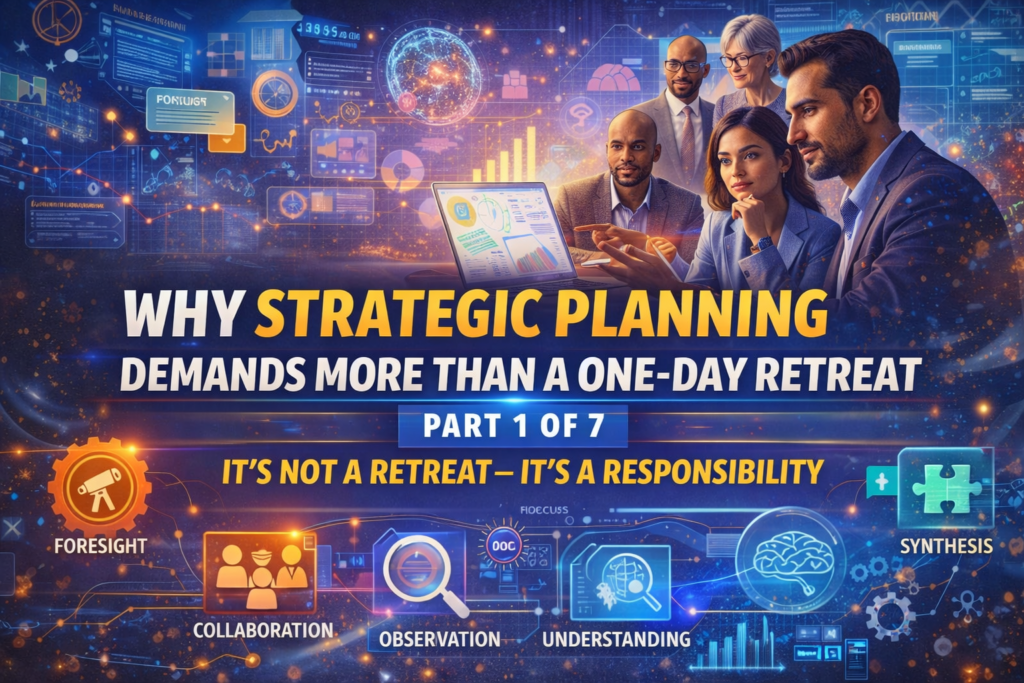
Strategic planning has become one of the most misunderstood responsibilities of association boards. Too often, organizations attempt to compress an entire strategic process into a single “in‑and‑out” planning retreat—an agenda-packed day that produces a document but not a strategy. These sessions may feel productive, but they lack the essential ingredients of real strategic work: research, […]
Part 5 – The Next 250 Years – Building a More Perfect Union
So what comes next? If the first 250 years taught us that ideals can endure, the next 250 will test whether institutions can adapt. Technology will accelerate; demographics will shift; global interdependence will deepen; the nature of work will evolve. But the American promise won’t change. Our task is to make our systems as dynamic […]
Part 4 – Celebrating 250 Years – What Associations Can Do
Anniversaries invite rituals. Let’s choose rituals that renew the promise. Celebration should be joyful, yes—but also generative. Here are concrete ways associations can mark America at 250 in ways that echo forward: 1) Host an “America at 250” Signature Convening. Design a plenary that links your field’s past contributions to its future obligations. Pair historians […]
Part 3: The Unfinished Work – Closing the Gap Between Promise and Reality
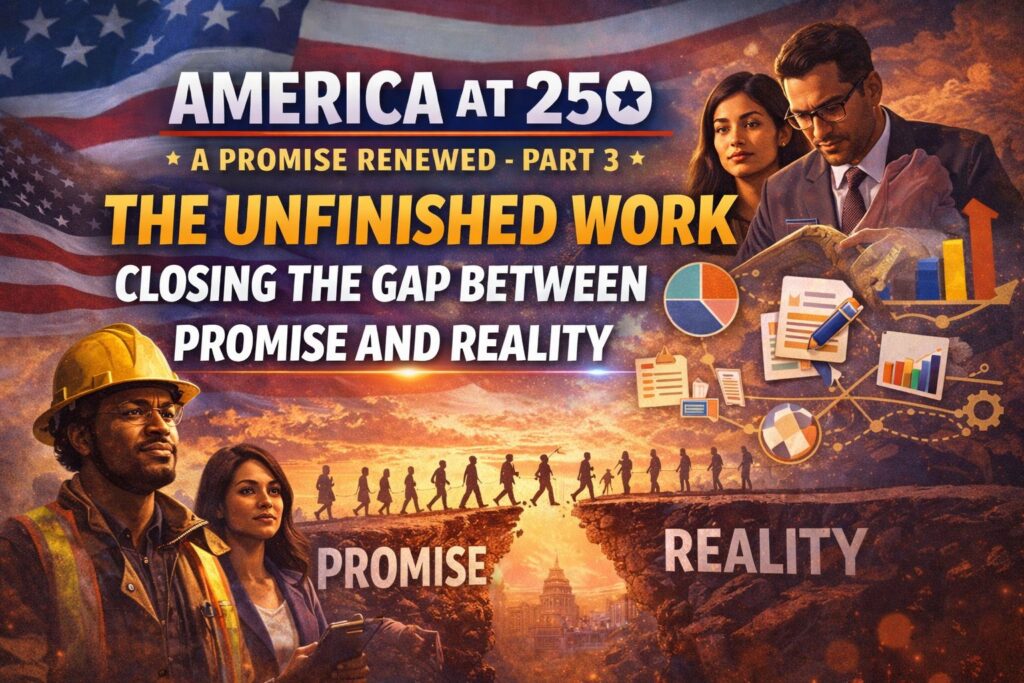
Honoring the promise means acknowledging the gap. Equality is our creed, but not always our condition. In every sector, we can map disparities—access to education and training, representation in leadership, capital and contracts, geographic inequities, and the friction of legacy systems that no longer serve a modern workforce. To pretend otherwise is to resign ourselves […]
Part 2: A Nation of Associations – The Power of Collective Action
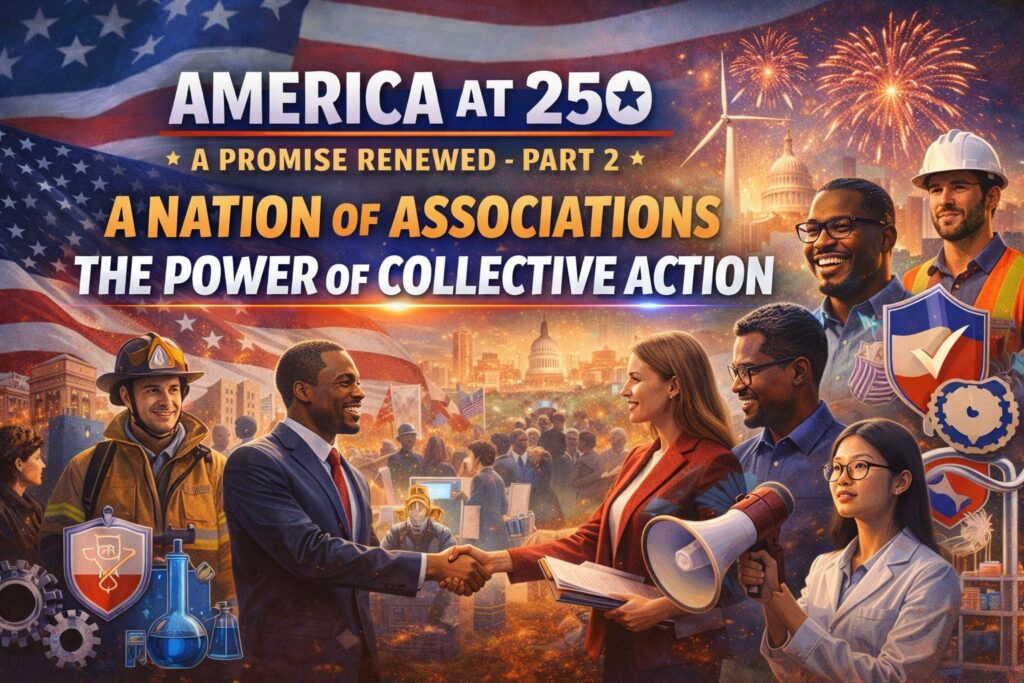
America’s progress has always been collective. We mythologize rugged individualism, but we live by organized interdependence. Associations are where that interdependence becomes intentional: where knowledge is codified, standards are established, ethics are enforced, careers are developed, and voices are amplified. If democracy is the operating system, associations are some of its most important applications. When […]